
This Pennsylvania cyber charter proposal would replace teachers with AI-based lessons

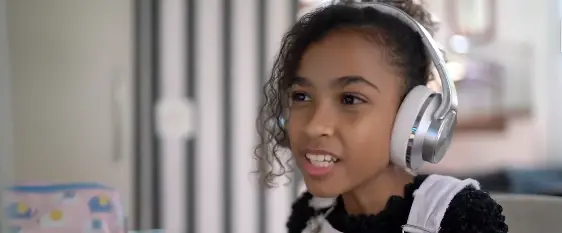
The Texas founders of an unconventional AI-based learning model want to expand into Pennsylvania, pitching a plan for a cyber charter school that would replace teachers with software and squeeze traditional academics into 2 hours of daily instruction.
Representatives of Unbound Academic Institute Charter School, which has a pending application before state officials, say their artificial intelligence technology tailors lessons to each child and helps them master material more quickly. Compressing the typical school day into 2 hours keeps students from burning out on academics and frees up time for developing a range of other life skills, they say.
And instead of traditional teachers, the school uses educators called guides to coach students and monitor their progress.
AI System Will Drive Academics at New Virtual Charter School
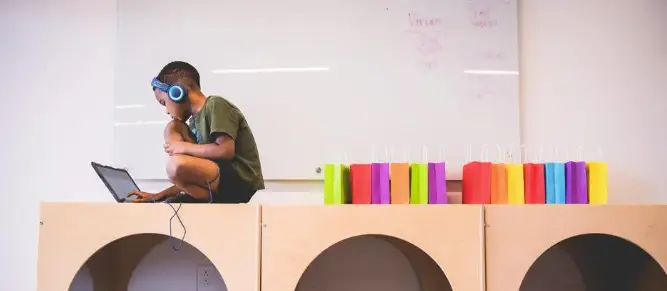
Opening this fall in Arizona, Unbound Academy will use AI to condense core academic lessons to two hours a day, followed by workshops, mentorship sessions and student-led projects, per the school’s charter application.
A new virtual charter school in Arizona will use artificial intelligence-based learning apps to teach core academic lessons in two hours a day. The other four hours will be dedicated to mentorship sessions, student projects and workshops on topics such as public speaking and financial literacy, according to the school’s charter application.
Called Unbound Academy, the charter will serve up to 200 students in grades four through eight starting this fall, and can grow to enroll 800 students over time, according to the Arizona State Board for Charter Schools, which approved Unbound Academy’s application last month.
AI-focused private school expands
Alpha School, the private school that made headlines last year for its AI-powered, two-hour learning periods, is expanding in Austin.
Why it matters: An increasing share of Austin kids are heading to private schools as public schools struggle to attract and keep students.
Alpha School: Using AI To Unleash Students And Transform Teaching
Alpha School represents a radical departure from traditional education. Their model is built around a bold claim: By leveraging AI-driven, adaptive learning technology, students can complete an entire day’s worth of academics in just two hours. The rest of the day is dedicated to life skills, passion projects, and co-curricular activities, creating a balance between independent mastery and communal engagement.
This approach is designed to solve two persistent challenges in education: the inefficiency of one-size-fits-all instruction and the isolation of individualized learning. By allowing students to work individually at their own pace but within a shared environment, Alpha School preserves the social benefits of schooling while eliminating many of its traditional inefficiencies.
The six-hour school day is dead. Luckily, there’s an even better solution.

Welcome to 2 Hour Learning, where kids learn twice as much, twice as fast.
It’s true — kids can crush academics in just two hours a day. And by “crush,” I mean, climb their way to the top 1% of the nation. This isn’t hyperbole. It’s happening right now in the halls of our flagship school, Alpha. And your kids could be next.
To ease the swell of panic that probably just rose in your throat — “you mean the newest, most successful form of education includes kids coming home after just two hours of school!?” — you should know that the “two hour” model only applies to hard and fast academics. (Yes. Take a breath. All is well.)
It works like this:
Mornings are for academics. Kids spend two hours immersed in deep, focused learning with traditional academia: math, reading, science, history.
Afternoons are for life skills. Kids spend four hours participating in workshops that simulate real-world skills: public-speaking, entrepreneurship, creative writing, financial literacy.
Kids aren’t built to sit butt-in-chair for six hours a day. Intuitively, we know this. They need movement and conversation, things to build and challenges to overcome. It’s frustrating enough for adults to be tethered to their desk all day. Why subject kids to the same fate? Why not fill their afternoons with activities that inspire them, that show them how the world actually works? Say, launching a food truck business, or writing a Broadway musical, rather than nodding off during post-lunch afternoon algebra. Kids are far more capable than we give them credit for, and the six hour school day keeps them shackled in these chains of unbelief.
The two-hour learning model, however, gives kids precisely what they need — legitimate academia and real-world experience — precisely how they need it — action over absorption.
This isn’t a romanticized ideal, either. The results are remarkable. The data is astonishing. Two hour learning doesn’t just educate kids, it equips them to do what most adults cannot: crowdsource funding, launch AirBnbs, start businesses, code their own apps.
This is the future of education.
Just two hours a day leads to remarkable outcomes
We’ll start with Alpha’s results:
Classes rank in the top 1% nationally across nearly every subject.
Academic progress that would take years in a traditional school is compressed into mere months. We have students complete more than two grade levels in just six months.
Students learn twice as much, twice as fast — literally. In traditional schools, a fifth grader who gains four points in math gains eight here. For a seventh grader in the 99th percentile at a traditional school, that jump is from seven points to 14.
To be especially blunt, the halls of Alpha are not filled with nepo-baby prodigies. One of our campuses (Alpha Brownsville) lies in the heart of one of the poorest districts in America, and many of our students there come from significantly disadvantaged backgrounds. Even still, they learn at more than twice the rate of their peers in traditional schools. Socioeconomic status does not sway the success of the model.
And the data doesn’t stop there.
On average, our high schoolers score a 1470 on their SAT. Our hallways teem with National Merit Scholars and AP Scholars with Distinction. Alpha alumni get accepted to elite institutions like Stanford, NYU Shanghai, and Howard University — all while spending just two hours a day on academics.
And kindergarteners? To be honest, we doubted this model could even work for them. But look: nearly all of our kindergartners rank in the top 1% for both knowledge and learning speed after just one year.
I bet you had no idea this level of success was even possible. (Once upon a time, I didn’t either.) Or, maybe you assumed this scale of success was set aside for the little Einsteins, the once-in-a-generation geniuses, the kids who slide straight out of the womb reciting the digits of Pi. But that’s not even close to being true.
Believe it or not, Alpha students aren’t born little geniuses. These are average kids (if we can call any kid “average”) who are simply put in the position to thrive. And that is the two hour learning model.
So, what makes it tick? Why does it work so well?
The secret is, and always will be, personalized education
The genius of the two-hour model can be summed up into seven syllables: individualization.
We’re used to education molding kids into little standardized clay pots, and this works fine for the few but leaves most kids floundering. The two-hour model follows a different philosophy, one that prioritizes the personal needs of each kid.
There are two keys to success here: individualized AI tutoring and mastery-based learning.
Individualized AI tutoring supercharges kids’ learning
If you’re flinching at the idea of “an AI tutor,” just know: this isn’t some Silicon Valley fever dream where we hand kids a tablet and say, “Let us know when you’ve finished high school.” Nor is it a dystopian fantasy where kids only want to hang out with their Siri.
In the right environment, with the right supervision, AI supercharges kids’ learning.
A few years ago, an eighth-grade girl enrolled in Alpha. We realized she was academically behind — three years behind, to be exact. She had only mastered up to fifth-grade concepts. Within one year of working with an AI tutor, she was ready for high school.
Read that again.
Almost four years of schooling, absorbed in just 365 days. That’s a staggering amount of information for anyone to digest in such a short amount of time, much less a child. Such is the power of personalized AI tutoring.
What if every kid in the classroom could have their own unique lesson plan like this? Every facet of the curriculum tailored to their struggles, their interests, their own little starburst of genius. This is a sneak peek into the Alpha classroom.
Struggling with math? An AI tutor not only blocks out extra time for students to practice equations, but it drums up inventive and exciting ways to make these numbers click, to make math feel relevant and not so “mathy.”
Excellent writer? An AI tutor challenges students with a more advanced curriculum, pushing them higher and higher, sharpening their genius in ways that conventional education is simply unable to do.
The rise of AI tutors will only continue to revolutionize education, not because it’s easy and efficient (it is), but because it’s extraordinarily effective.
Mastery-based learning is a necessity
Let’s role-play for a moment. You’re a CEO, and you have one employee who only understands about 70% of their role. Do you give them a promotion? No, of course not. You expect them to show competency in their field before you give them more responsibility.
And yet, we allow students who understand just 70% of the curriculum to progress to the next grade.
Have you ever paused to wonder how unjust this is for kids? Over time, the gaps in their knowledge will compound. They will develop intense blind spots. And inevitably, they will fall behind.
Mastery-based learning isn’t a luxury. It’s a necessity.
And with the two-hour learning model, mastery is non-negotiable. Instead of slopping through six hours of monotonous busy work, Alpha students learn in quick, intense bursts of productivity. They’re required to demonstrate 100% understanding of a topic before advancing onto the next — and the results speak for themselves.
A quick disclaimer…
There are no magic bullets in education, and two-hour learning is no exception. The system doesn’t work for everyone. That’s the point. One-size-fits-all education is the very war that we’re waging.
A two-hour school day won’t be effective for every kid — but it is highly effective for 80–90% of kids. Not because it offers some elite, exclusive curriculum, but because it offers personalized curriculum. And what more could we ask from our education?
The two-hour school day is a glimpse into what education can and should be: invigorating, joyful, tailored to the individual, and designed to maximize the potential of the next generation.
Welcome to the future of education. You’re just in time.
Austin school that uses AI instead of teachers opens esports academy with similar concept
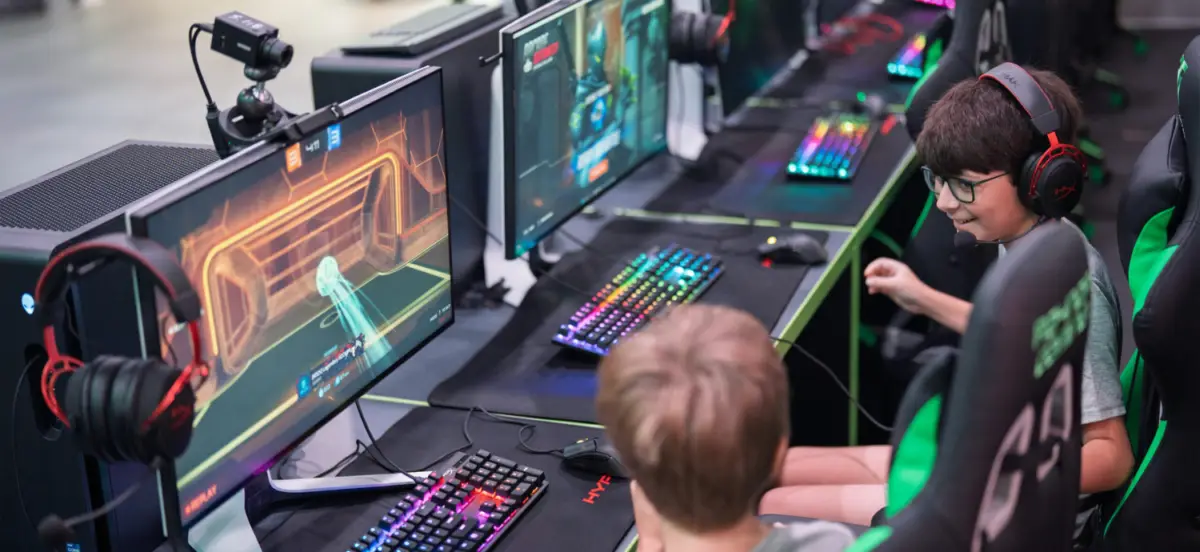
AUSTIN, Texas — There’s a new esports academy private school in Austin called NextGEN Academy that focuses on using gaming as a pathway to learning life skills.
Why Kindergarten Matters

Alpha kindergarteners learn twice as fast as the national average, which means no matter where they come in, they end up in the top 10%, with the vast majority in the top 1% nationwide.
Here’s what that means:
By the end of Kindergarten, your kids will read chapter books like Mercy Watson and Magic Treehouse. They will know 600 sight words (most kindergartners know 25-50). They will have mastered 0-20 addition and subtraction (0-10 in under 3 seconds).
And if your child is gifted, they will far exceed this. For example, we have multiple kindergartners doing 4th grade math and reading. There is no ceiling.
But, it’s not just about academics. Students will learn valuable, limitless life skills:
- Grit: They’ll be able to assemble a 100-piece puzzle (most kindergartners can only do 10-25).
- Teamwork: Your child, with their classmates, will run Kindergarten’s parent night. (Parents are not allowed to help at all).
- Self-driven learning: Without being taught, your child will learn how to tie their shoelaces on their own.
- Overcoming fears: Your child will learn to swim in the deep end (on their own).
And above all, your child will love school. This is the foundation for their next 12 years, and they must be excited to go to school every day.
Don’t believe us? When surveyed, Alpha students report that they’d choose school over a vacation any day. Ready to make their 12 years amazing? Ask us more.
About Alpha
At Alpha School, we unlock your kids’ limitless potential, blending tech, real-life skills, passion, and purpose. Students only spend 2hr per day on academics, but learn 2x as much as they would in standard school.
Limitless Life Skills Workshops enable students to learn valuable life skills while pursuing their passions in project-based workshops.
Ready to revolutionize your child’s learning journey? Dive into the world of limitless potential at Alpha.
5 Ways COVID Changed Kindergarten
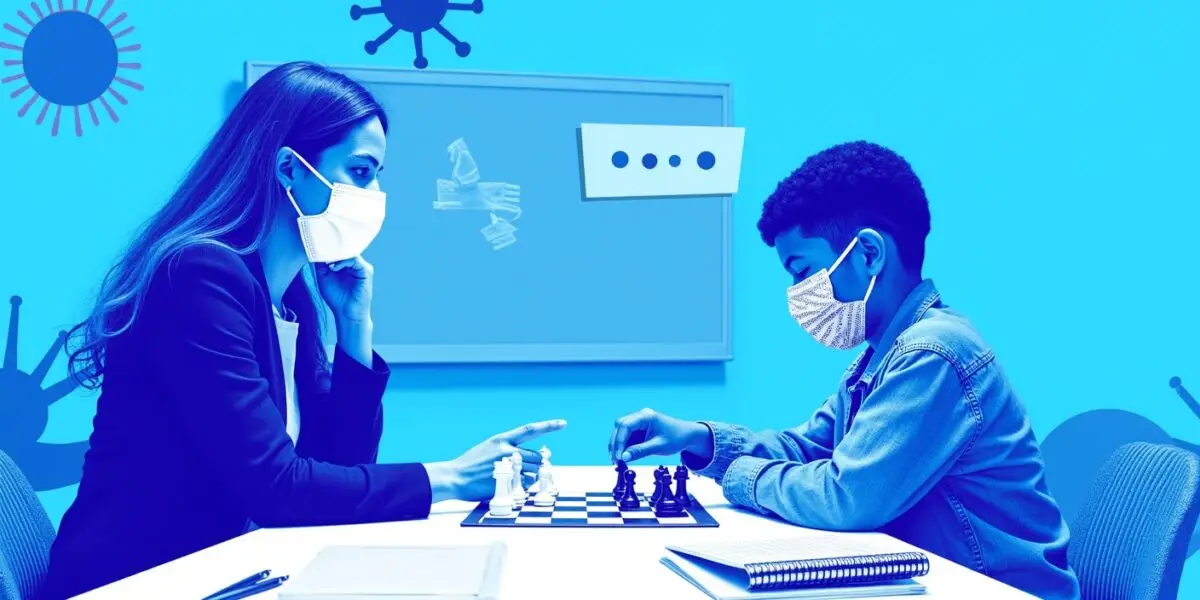
Ever tried counting how many times your kid asks “why” in a day? It’s probably just as challenging as understanding the seismic shifts in our education system post-COVID. Here’s the deal: If you’re looking for the right kindergarten, it’s important to understand that not all schools are keeping up with these crazy times. With public school enrollments dropping by 1.2 million kids post-pandemic, there’s no doubt where your child starts their academic journey is more than just learning their ABCs; it sets the tone for the rest of their lives.
Here are 5 ways COVID changed kindergarten:
1. The Big Enrollment Drop
New York City kindergartens alone experienced a 17% drop in enrollment. The reason? Slipping academic standards, especially in key areas like reading and writing. But guess where these kids are going? To private and charter schools, with private schools seeing a whopping 10-18% surge in enrollments post-COVID.
2. Zoom School Nightmares
It was like flipping through movie channels; some schools were blockbuster hits, while others were major flops. Parents got a direct glimpse into virtual classrooms and, spoiler alert, not all were giving standing ovations. Many were underwhelmed due to the glaring inconsistencies in student engagement and teaching quality.
3. Essential Skills Went MIA
The pandemic exposed some gaping holes in curriculums. Teamwork, critical thinking, basic life skills—suddenly, these weren’t just buzzwords but real needs. And many schools seemed to miss the memo, and still haven’t figured out how to develop these skills into the classroom.
4. The “Pass-Along” Phenomenon
Some public schools began “social promotion,” moving kids to the next grade, regardless of mastery. It’s like earning a gold star just for being there. Behind the scenes? Teachers juggled catching up old lessons while teaching new ones. Yet as the year concluded, up the students went.
5. Parents Taking Charge
Post-COVID, parents aren’t waiting on the sidelines. They’re actively seeking schools that prioritize immersive learning, offer real social connections, and truly cater to each child’s unique needs.
Alpha School is redefining what parents should expect from K-8 education. If you’re ready to create limitless possibilities in your child’s life, sign up for an Alpha School tour.
5 Reasons Why Movement Matters in Kindergarten
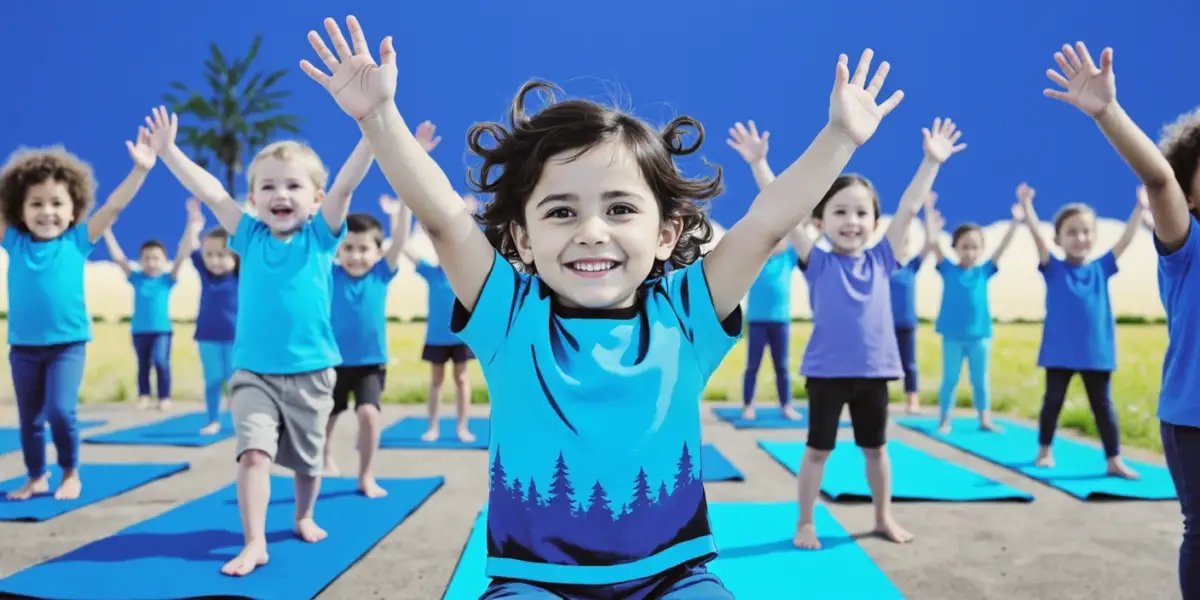
Ever tried to bottle up a tornado? Yeah, not likely. Asking a kindergartener to sit still all day is just as improbable. So why enroll your child in a school that curbs their boundless energy? These pint-sized powerhouses require constant movement. Choosing a kindergarten that prioritizes regular activity over a mere 25-minute recess once a day will give you a content, grounded child—and a welcome dose of peace and quiet at home.
Here are 5 reasons why movement matters in kindergarten:
1. Tune-Up Their Tiny Brains
Before diving into ABCs and 123s, a little jig or hop is the secret sauce to kickstart their learning engine. Movement preps the noggin, making absorbing lessons as easy as pie.
2. Healthy Habits for Life
Remember those wild dance moves at your cousin’s wedding? That’s just kids being kids. Kindergartens embracing this truth lay the groundwork for a lifetime love of staying active. Let’s let them groove!
3. Think Fast, Move Faster
Those little jumping jacks and wiggle sessions? They’re like brain boosters, turbocharging your child’s cognitive prowess. Picture neurons lighting up like a dancefloor – that’s the brain on movement!
4. Happier, Calmer Kids
Got a case of the Kindergarten blues? A hop, skip, and a jump are all it takes to uplift spirits. Movement sprinkles a bit of emotional magic, ensuring smiles stay wide and tantrums stay at bay.
5. Supercharged Learning
Who said learning can’t be a ball? From alphabet boogies to number jigs, when movement meets education, the result? A supercharged, fun-filled learning experience that sticks!
Alpha School is redefining what parents should expect from a private school. If you’re ready to create limitless possibilities in your child’s life, sign up for an Alpha School tour.