A.I.-Driven Education: Founded in Texas and Coming to a School Near You

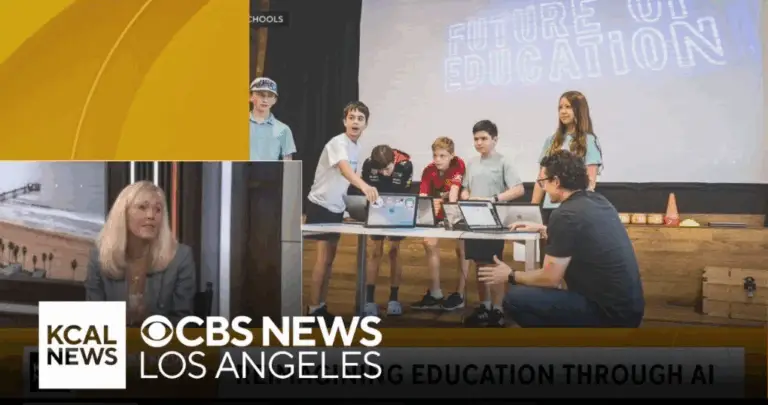
At Austin’s Alpha School, students spend just two hours a day on academics, led by artificial intelligence tools. New Alpha schools are set to open in about a dozen cities this fall.

In Austin, Texas, where the titans of technology have moved their companies and built mansions, some of their children are also subjects of a new innovation: schooling through artificial intelligence.

And with ambitious expansion plans in the works, a pricey private A.I. school in Austin, called Alpha School, will be replicating itself across the country this fall.

Supporters of Alpha School believe an A.I.-forward approach helps tailor an education to a student’s skills and interests. MacKenzie Price, a podcaster and influencer who co-founded Alpha, has called classrooms “the next global battlefield.”

“I’ve seen the future,” she wrote on social media, “and it isn’t 10 years away. It’s here, right now.”


Texas school finds valuable classroom inside a food truck


At this time of year, there’s a question on the minds of parents and teachers: what did you learn this year? Students at a school in Austin, Texas had a chance to hone their financial and leadership skills by running a food truck. Bryan Gordon, the teacher who worked with the students on this project, joins Ali Rogin to discuss.

Could AI Really Replace Teachers? Not So Fast, Experts Say

As dissatisfied American parents look for education alternatives in the wake of pandemic-era frustrations with the status quo, the role of the teacher is rapidly evolving, with some private schools redefining the human element inside tech-laden classrooms.

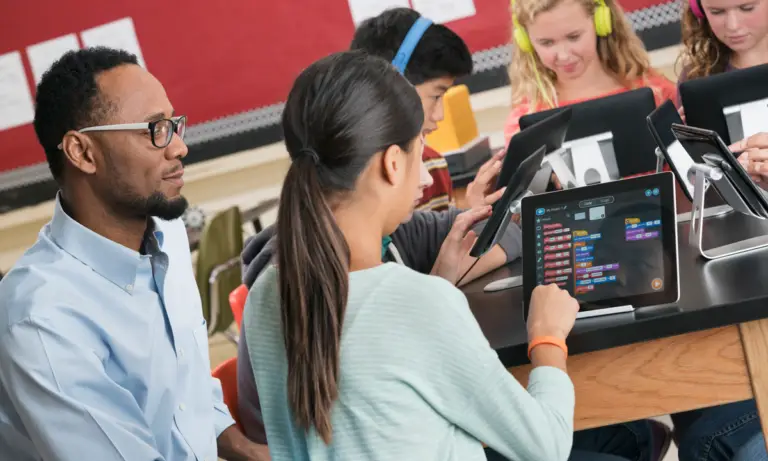
At Alpha School in Brownsville, Texas, part of a growing chain of private institutions that utilize artificial intelligence to teach core subjects, instructors act as facilitators for pre-K through eighth grade students working to master customized 30-minute sessions.

Teachers throughout Alpha’s network, which is expanding into New York City, Houston, Phoenix and elsewhere this fall, aim to mentor and motivate students while imparting a sense of autonomy as early as preschool.

AI is running the classroom at this Texas school, and students say ‘it’s awesome’

At a time when many American students are struggling to keep up, a private school in Texas is doing more with less, much less.

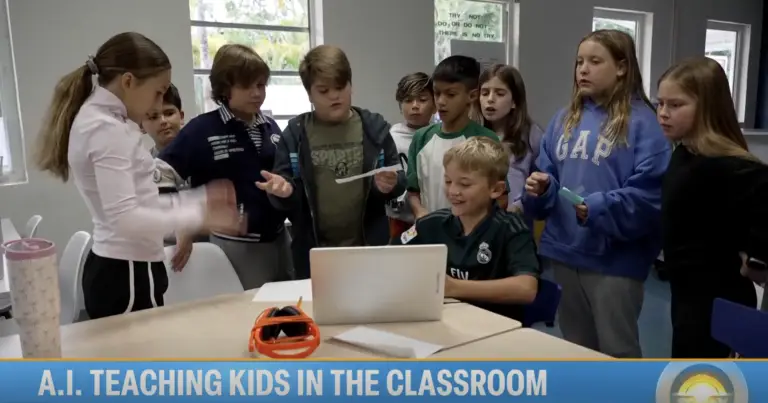
At Alpha School, students spend just two hours a day in class, guided by an Artificial Intelligence (AI) tutor. But results are impressive: students are testing in the top 1 to 2% nationally.

“We use an AI tutor and adaptive apps to provide a completely personalized learning experience,” said Alpha co-founder MacKenzie Price during an interview on Fox & Friends.

“Our students are learning faster. They’re learning way better. In fact, our classes are in the top 2% in the country.”

The Snapchat Move That Leaves Teen Girls Heartbroken

Makers of the popular social app tried to remedy the problem, but even the fix is causing drama


It’s called the Snapchat increase; green up pointing triangle half-swipe, and it’s making a lot of teenagers miserable.

When users swipe open a message without lifting their finger off the screen, they can see the message in full without marking it as read. If they swipe it closed again before removing their finger, the message’s sender sees no evidence of the sneak peek.

The point of this design was to alleviate the pressure teens feel to respond immediately, a Snap spokeswoman says. 

But when teen girls, in particular, see that a crush is active on the app while their message remains unanswered, it can set off a spiral of self-doubt: Did I say the wrong thing? Does he not like me? WHY ISN’T HE WRITING BACK?!?!

“Just dating and talking to guys in general can be so complicated. It’s hard to grasp how they’re feeling about you,” says 15-year-old Elke Thorsen of Darien, Conn. “The whole half-swiping thing just amplifies everything before it’s even begun.”

Whether teens meet online or in class, the “talking stage” that precedes dating often starts on Snapchat. They exchange flirty messages, and when those are labeled as read, it’s an unofficial mile marker for how things are going.

Snap acknowledged that the half-swipe gave some people—generally the boys—an upper hand, and in late 2023 it released a countermeasure: Snapchat+ subscribers, who pay $4 a month, can catch someone in the act of half-swiping them: The “eyes” emoji appears while the lurker is lurking.

But that’s created a whole new set of problems, teens say. Chronic half-swipers are on edge because they’re at risk of being outed. For the senders, knowing for sure they have been micro-ghosted might only deepen the anxiety. And since the eyes only appear in the moment, many teens say they remain glued to the app after sending a message to a crush.

SHARE YOUR THOUGHTS

In what other ways does technology disrupt teenage life? Join the conversation below.

“Those eyeball emojis have become one of the most stressful things in my life to see right now,” says Thorsen, who signed up for Snapchat+ in order to know if her messages were being read.

Snap has a knack for capitalizing on teenage insecurities. The Snap Map allows them to check where their friends are hanging out—whether they were invited or not. The friend solar system shows them how they rank in importance to others. (Snap made the friend solar system opt-in, rather than default, after I wrote about it last year.) 

“Our hearts go out to every teenager who is dating. It’s incredibly hard!,” the Snap spokeswoman says. “We’ve been deliberate in the features we bring to Snapchatters so that they work to reduce pressure, not add to it.”

Why girls?

Elle Liemandt, a 16-year-old from Austin

Elle Liemandt, a teen who dispenses dating advice to peers, frequently hears from girls worried about being half-swiped by boys. Photo: Elle Liemandt

“Long before the advent of social media, we’ve known adolescent girls are more likely to be affected by interpersonal stress than boys,” says Sophia Choukas-Bradley, an associate professor of psychology at the University of Pittsburgh and director of the school’s Teen and Young Adult Lab.

Since girls are socialized from an early age to be caretakers and to pay attention to others’ needs, she says, they’re more likely than boys to be hyper vigilant to any signals that they’re being rejected or ignored.

Elle Liemandt says she has been half-swiped by boys more times than she can count and that the practice has become one of the most toxic parts of teen dating. The Austin, Texas-based 16-year-old—who dispenses dating advice to her 189,000 TikTok followers and to more than 40,000 teens who have downloaded her AskElle app—fields frequent questions from girls about how to handle the snub. She advises girls to forgive and forget if it is a one-time offense. But if the half-swiping persists, Liemandt says, it is time to re-evaluate the budding relationship.

As adults, we tend to assume that if someone doesn’t text back right away, that person is probably busy. But for teens in the throes of a crush, waiting even minutes for a response can feel like an eternity.

Alpha School: Using AI To Unleash Students And Transform Teaching

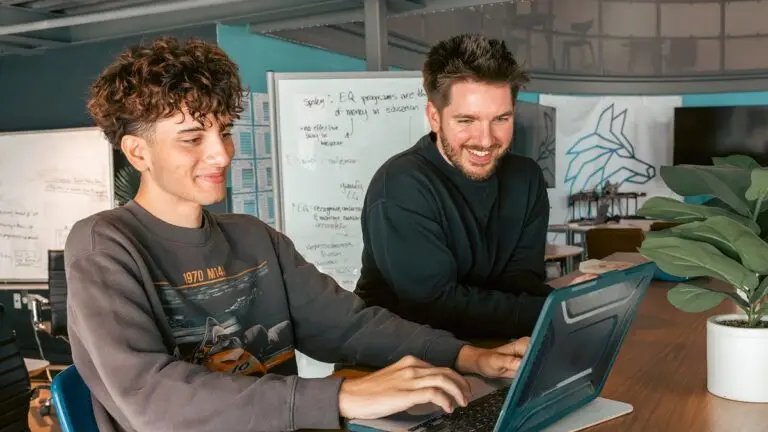
Discover a transformative education at Alpha School, where AI-driven technology revolutionizes learning. Complete a full day’s academics in just two hours, freeing time for life skills. This model enhances engagement and offers personalized AI tutors, allowing students to excel in core subjects. Join us in redefining education and unlocking every student’s potential!

Alpha School Miami: The Future of Education in Our Community

An innovative new school opens in Miami set out to redefine education for families looking beyond the traditional school model. It’s a school where 8-year-olds launch startups, 10-year-olds give TED-style talks and 12-year-olds tackle Harvard Business School challenges. Alpha School boasts a 10-year track record of excellence in Texas, where classes consistently rank in the top 2% in core curriculum, kids get prepared for life, and one of the key measures of success is that “students love school.”

Alpha School is opening its doors near Tropical Park at 8000 SW 56th St., bringing its proven model to our vibrant city. Imagine a school where there are no lecture-based classrooms. They’re replaced with personalized learning plans and project-based workshops focused on life skills. The entire school experience is shaped around individual student needs, aptitudes and passions. The innovative approach is attracting national attention and was the focus of recent special reports on The Today Show and NBC News, singling it out as a model for ‘The Future of Education.’

Alpha School uses AI to teach students academics for just two hours a day

AUSTIN, Texas – One Austin woman believes traditional schooling is outdated and filled with busy work.

That’s why she created a new learning method where there are no teachers, and students learn academics through an AI tutor on a series of apps, for just two hours a day.

“Our students are learning twice as fast as students in a traditional classroom, but they are doing it in only 2 hours a day,” said MacKenzie Price, co-founder of the Alpha School in downtown Austin.

Unlocking Potential in Kids: Empowering The Path to a Brighter Tomorrow

In a world where kids are told that they ‘won’t be able to’, we believe in telling them they ‘absolutely can’. At 17, Joan of Arc led an army to victory. Malala Yousafzai became a Nobel laureate, championing girls’ education worldwide. Greta Thunberg sparked a global climate movement before turning 18. They were relentless in pursuing their potential and passions. Today, by actively nurturing young minds and instilling a belief in their abilities, we unlock a future where every child can achieve greatness. Here are ten key benefits of empowering young minds through such transformative practices.

Boosted Confidence

Empowering children instills a sense of self-belief and confidence. When young minds are encouraged to pursue their interests and are supported in their endeavors, they develop a strong sense of self-worth and the courage to take on challenges.

Enhanced Critical Thinking

Encouraging critical thinking from an early age helps children develop the ability to analyze, evaluate, and create new ideas. This skill is crucial for problem-solving and innovation, equipping them to tackle complex issues in the future.

Improved Problem-Solving Skills

When children are empowered, they learn to approach problems with a solution-oriented mindset. They are encouraged to think creatively and independently, which enhances their problem-solving abilities and prepares them for real-world challenges.

Increased Engagement

Empowering young minds through personalized and relevant learning experiences keeps them engaged and motivated. When children see the value in what they are learning and how it applies to their interests, they are more likely to be enthusiastic and involved.

Encouraged Creativity

A supportive environment that values creativity, allows children to explore their imagination, and express themselves. This not only enhances their learning experience but also fosters innovation and adaptability, skills that are highly valued in today’s world.

Stronger Leadership Skills

Empowered children often take on leadership roles in various settings, learning to guide, inspire, and motivate others. By engaging in collaborative projects and activities, they develop essential leadership qualities that will serve them throughout their lives.

Greater Collaboration

Encouraging collaboration from an early age helps children develop strong interpersonal skills. Working together on projects and activities teaches them the value of teamwork, effective communication, and appreciating diverse perspectives.

Development of Life Skills

Beyond academics, empowering young minds means equipping them with essential life skills such as communication, empathy, and resilience. These skills are crucial for personal growth and success in all areas of life.

Fostered Independence

Encouraging self-directed learning and decision-making fosters independence in children. This independence is crucial for lifelong learning and empowers students to take ownership of their education and future.

Increased Motivation

Empowerment often leads to increased motivation. When children feel that their interests and efforts are valued, they are more likely to be motivated to set and achieve goals, driving their personal and academic growth.

Capable Citizens of the World

Empowering young minds extends beyond personal growth; it has significant societal benefits. By developing critical thinkers, problem solvers, and empathetic leaders, we prepare students to contribute positively to their communities and the world. These empowered individuals are better equipped to address global challenges, drive innovation, and foster social progress. As they grow, they bring these skills and attitudes into the broader society, promoting a culture of collaboration, understanding, and continuous improvement.

Conclusion

In conclusion, empowering young minds through personalized learning and skill development is essential for their personal growth and the betterment of society. By fostering critical thinking, creativity, and independence, we prepare students not only for academic success but also for meaningful contributions to the world. Investing in the education and empowerment of young minds is an investment in a brighter, more innovative, and inclusive future.