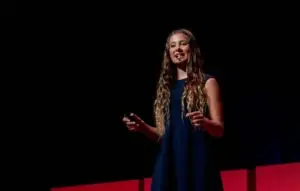
I came across an article on X a few weeks ago that stopped me mid-scroll, because it was written by a public school teacher who spent a day at Alpha. Turns out she was there as part of a shadow experience we run with applicants for guide roles. Basically, she was trying to figure out if this model is real.
We hear from parents and researchers all the time about “education in the age of AI,” but we almost never hear directly from teachers. So I wanted to share her article with you.
Here’s where she landed.
I recently had the opportunity to spend the day with Alpha School students. I wish every teacher and parent could experience this.
I watched 3rd–6th graders demonstrate more independence, initiative, and problem-solving than my high school students.
It was a complete 180 from my traditional public school classroom, where directions are displayed, spoken, repeated, and students still ask, “What are we supposed to be doing?”
These students collaborate, troubleshoot, and iterate their projects almost entirely on their own. They give each other constructive feedback. They track their own progress, start their own learning activities, and schedule coaching calls when they’re stuck, all without an adult telling them step by step what to do.
I tutor private school students on the side. I usually coordinate logistics through their parents. These Alpha elementary school students are more self-directed than most of my private school students.
The culture at Alpha is unlike anything I’ve seen in a school. When a classmate gets a perfect score on an assessment, the whole room celebrates. There’s no fear of being called a “try-hard.” The students genuinely want each other to win. And when a student doesn’t achieve the desired outcome, their peers offer encouragement and uplifting comments. Excellence is expected, and there are no excuses like, “it’s okay…it was a hard test.”
I also had the opportunity to observe the students practicing for an upcoming presentation. I watched a fourth grader command a room with more composure, clarity, and confidence than I’ve seen at professional development sessions.
The great debate on screen time usually surfaces when Alpha’s name comes up, so I want to address that also. The two hours of academics that take place on screens are actually less screen time than most traditional schools use. In the afternoon, students were only on devices for purposeful tasks like designing in Tinkercad or researching material costs to budget for their workshop projects.
Every teacher should spend a day on an Alpha campus. It forces an uncomfortable realization that we have normalized limiting students, not only academically, but also in their identity. We have taught them that needing help is expected, that waiting for instructions is appropriate, and that someone else is always responsible for their learning.
Children conform to the expectations we set for them.
Alpha flipped the script. They took autonomy far beyond the traditional “choice board” or token independence activities. They rebuilt the entire model around the belief that children are capable of far more than we typically ask of them.
The results are very clear. Give students real independence and agency, and they become self-directed learners who expect to solve problems, not wait for instructions.
Before the predictable “those are just rich kids” replies arrive, this campus costs $15,000 a year.
Not $40,000.
The “income selection effect” argument is on borrowed time.
You can see why this article grabbed my attention. Public school teachers are having the same realization: if we educate kids the next 10 years the same way we have for 100 years, they’ll go into an AI world with no skills that matter.
Now for the good news I’ve been sitting on: her Shadow Day wasn’t the end of the story. She made it through our application process and recently announced where she’s headed next.

Can’t wait to see what Wendy builds at Alpha.
Teachers in the comments: what would you need to see to believe a model like this is real?