It’s inevitable that AI is becoming the quiet engine of our lives. Which means, AI has officially declared “checkmate” on traditional education.
Everything we think we know about school is about to change. And we have to embrace this change with open arms. Why? Because we cannot afford for education to stay stuck in the past while society surges forward. Otherwise, what’s the point of school? Why prepare kids for a world that no longer exists?
Classrooms must adapt to AI. Just probably not in the way you think.
The hard truth about “cheatbots”
Let me ease your mind: the future of education is bright. And it has nothing to do with chatbots.
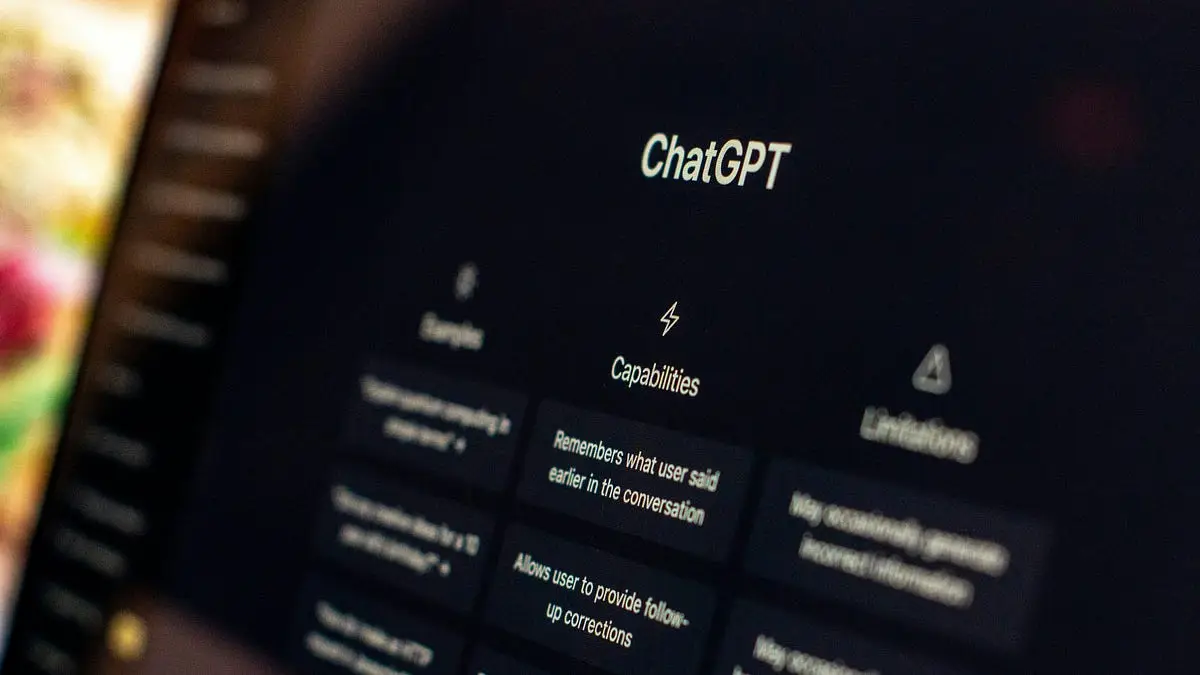
Many traditional classrooms are already implementing chatbots in an attempt to “adapt” to AI. But honestly, this is worst-case scenario.
Chat-based AI tools like ChatGPT, Lex, or Claude might as well be neon blinking signs for students: “Me, me, me! I can help you cheat!” There’s a reason the internet has dubbed them “cheatbots.” They discourage critical thinking. They encourage laziness and disengagement. And they definitely don’t help students develop agency or ownership over their own education. In no way do chatbots help students become self-directed learners.
How else can we use AI to revolutionize education in a way that actually works?
The answer: AI tutors.
Welcome to the golden age of AI tutoring
Learning scientists have known for over forty years that one teacher lecturing a group of twenty-five students is the worst way to teach something new.
Problem is, it’s all you and I have ever known.
Take away the teacher lecturing at the front of the classroom, and suddenly, things get scary. What could school possibly look like without a teacher giving a lecture? But I’m here to reassure you. These aren’t arbitrary claims; they’re rooted in learning science.
Students only retain about 5% of material they hear in a lecture. That’s a frighteningly small amount of knowledge, considering lecture-based environments are the foundation of traditional schools. We’ve gotten away with this model for a long time, but as technology advances, it’s collapsing. Lecture-based environments are experiencing a steady decline with even less student engagement.
Back in the 1980s, educational psychologist Benjamin Bloom conducted groundbreaking research comparing learning environments: traditional classroom instruction vs. one-on-one tutoring. His findings were staggering. Students who received one-on-one tutoring performed two standard deviations (or two sigma) better than students in a conventional classroom. That’s enough to move an average student into the top 2% of their peers.
This is known as Bloom’s 2 Sigma Problem. How do we scale the massive benefits of personal tutoring to every student, without needing a private tutor for every child?
For decades, the answer seemed impossible.
But with AI, we can now deliver this personalized learning at scale.
Say we remove the teacher from the front of the classroom. Not from the classroom completely; just the front of the classroom. No more lectures. No more passive learning. Instead, AI tutors deliver personalized academic curriculum to students.
In fact, studies show that it’s better to learn from an AI tutor:
-
In a recent Harvard study, learning from AI tutors doubled engagement in the classroom.
-
A 2023 McKinsey study found students using AI tutors gained an extra year of learning in just six months.
-
Stanford research shows AI-tutored students performed 30% better on tests than those in traditional classrooms.
-
Khan Academy’s AI tutor found that students using AI were twice as likely to persist through difficult problems.
But what does an AI tutor actually look like?
A decade ago, I co-founded Alpha School, where students complete their academics in just two hours a day and learn twice as fast as their peers in traditional classrooms. Students don’t receive academic instruction from chatbots or teachers. Instead, they use AI-powered learning platforms.
Learning platforms are pretty common. You’ll find them used in many traditional classrooms and almost all college classrooms. But with AI, this capability expands.
Each morning, Alpha students arrive at school. When they log onto their personal dashboard, ready to tackle their academics for the day, the AI is the underlying platform that ensures they jump directly into the correct material for their knowledge level. This is called “the zone of proximal development.”
Essentially, “zone of proximal development” is when students are learning at just the right level to help them grow. This is Alpha academics in a nutshell: every student following a prescribed learning plan in their zone of proximal development. Each student can learn standard Common Core curriculum at their own pace, on their own time, to total mastery.
The AI determines if kids are being challenged too much or not enough. It measures their focus and engagement. It makes sure students aren’t jumping ahead or skimming through material. Not to mention, the AI is constantly collecting data to send to both teachers and parents, providing statistical insights into how and what their kid is learning. Honestly, the AI functions like an undercover cop.
It’s funny: if you were to ask one of our students, “Hey, tell me about your AI tutor!” they’d probably look at you with a blank face. (“What AI tutor? I use adaptive apps like AlphaRead and AlphaWrite.”) And that’s honestly the gist of what “AI tutoring” really looks like.
“Cheatbots” are out. AI-powered personalized learning plans are in.
But what about teachers?
AI tutors free teachers to “mentor” instead of “teach”
Teachers are the backbone of every school, and no technology can ever replace their impact. But let’s be honest: their impact doesn’t come from PowerPoints on quadratic equations. It comes from one-on-one connections with students.
The #1 desire of a teacher is direct engagement with their students. It’s why they join the profession in the first place: to positively impact the next generation.
Crazy thing is, teachers spend less than half of their careers actually doing it.

This data from McKinsey confirms what we already know: unfortunately, traditional classrooms aren’t built to sustain one-on-one relationships between teachers and students.
But AI tutoring does.
The teaching profession will finally shift away from lectures, homework assignments, and grading papers, and lean into motivation, inspiration, and deep personal mentorship.
AI tutors won’t replace teachers, but free them to do what they’re best at: motivate and emotionally support their students. Teachers will finally wake up on a Monday morning and know they’re doing the work they signed up for in the first place.
Education will *finally* unlock human potential
When I think about the future of education, I don’t envision teachers giving lectures or students using ChatGPT to write their essays for them.
Instead, I picture a kid walking into school excited, confident, and ready to tackle challenges tailored just for them. I picture a teacher smiling, knowing their day will be spent mentoring kids one-on-one, not micromanaging 30 disengaged students at the same time.
Thanks to AI tutors, that vision is within reach.
AI tutors are the most powerful tool we have to drag education into the 21st century. They finally give education a chance to do what it was always meant to do: unlock human potential.