Seven million kids in the US have been diagnosed with ADHD. That number has skyrocketed over the years, and parents are desperately trying to figure out why.
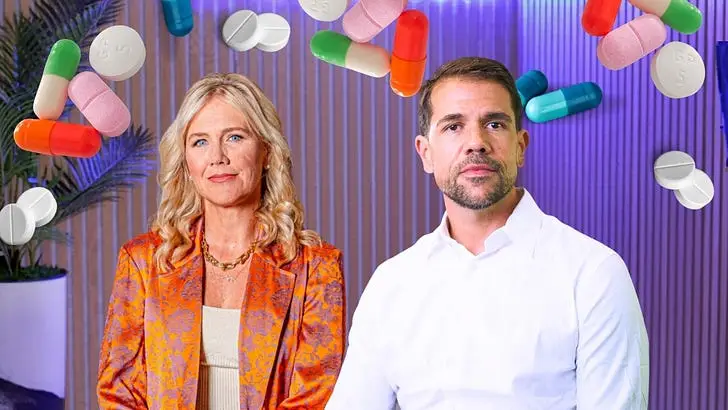
This week on the Future of Education podcast, I sat down with David Bidler, founder of Physiology First, a nonprofit built around one core belief: every child is limitless, but we’re running modern educational software on neglected biological hardware.
David makes the case that the majority of what we’re calling clinical disorders in kids are actually just biological needs going unmet. We get into the dark history of ADHD, the science of the brain-body connection, what it looks like to unleash kids’ potential by tapping into their physiology, and how we can build educational models around this phenomenon.
I’ve shared 11 of the most important takeaways below. And if you enjoy reading or listening, don’t forget to leave a comment, like, or subscribe.
: MacKenzie
11 takeaways from the episode
- ADHD didn’t begin as a clinical diagnosis, but as “a moral defect of character among children.” I was shocked to learn that the origins of ADHD are surprisingly dark. Here it is in a nutshell: in 1800s London, a pediatrician named George Still was monitoring a group of kids in a hospital when he noticed that certain kids had more trouble sitting still. His great revelation: not all kids behave the same way, and something must be wrong with the kids who behave differently.
- Kids are at war with their own bodies. Skyrocketing rates of ADHD are proving one clear realization: our children’s needs are not being met. No one is built to sit still for 7 hours under fluorescent lights learning things that don’t inspire them. We’re putting kids in a position where it’s almost impossible for them to thrive. David says it best: “We’re labeling kids with disorders instead of honoring the fact that they’re trying to honor their bodies.”
- Kids metabolize dopamine at 3 different speeds. Fast metabolizers are novelty-seeking innovators and big-picture thinkers, always restless with exciting ideas. And traditional school is basically designed to punish them. They make up roughly 30% of kids. These are also, by the way, the people building the future.
- If modern education were truly about learning, it would put brain health first. From David: “Traditional education is more about obedience than it is about empowerment. But what if we actually gave these kids the skills and tools to run with their wildest dreams, and to be prepared physiologically to catch that dream?”
- The idea that today’s kids are “lazy, unmotivated, and always on their phones” is a myth. Here’s the truth: kids don’t feel connected to the reality around them. They don’t feel alive in their own bodies. They’re scrolling themselves into a dopamine deficit state because they’re looking for someone or something to connect with.
- Physiology completes the puzzle of kids’ potential. Nutrition, sleep, and exercise are the building blocks of understanding your own brain and body. But 7 out of 10 kids don’t get adequate sleep. Less than 25% of kids get enough exercise. The average diet of ultra-processed food spikes glucose on the regular. What kids need is not a diagnosis or medication, but sunlight, movement, nutrition, sleep, support, and mentorship.
- A “physiology-first classroom” looks like kids who can connect their brain, body, and spirit. They use breathwork to regulate anxiety. They understand when their body needs movement instead of knowledge. Play and laughter are natural components of the environment.
- School should be more interesting than TikTok. Not because it’s entertaining or funny, but because it’s meaningful and individualized. It should make kids feel alive and present in their own bodies. It should make them put their phones down and forget all about them.
- Obedience is not the value proposition of the future. Autonomy is. Sitting still and following directions got you the factory job in 1930. Those factories are gone. The economy now rewards the big-picture thinkers, the visionaries, the kids who are constantly chasing exciting ideas. We need to foster that in kids, not squash it.
- Parents have two choices: continue to ignore kids’ physiology because it’s inconvenient, or choose to honor it. From David: “We have to break the generational cycle of accepting a mediocre existence.”
- We refuse to have a generation of kids who believe they are broken, when they are in fact limitless. We share 99% of the same DNA. The less than 1% that differs represents millions of individual differences. No education system has ever been built around each child’s individual code of potential. We are just now starting to try.
What about you? What kind of environment have you seen your kid truly come alive in? I’d love to know.