4 Reasons Your Kid Is Learning More from Sports than from School

Where are kids in traditional schools learning their life skills?

Afterschool sports.

Yup. Kids build more grit, leadership, and social skills through afterschool sports than during the actual school day.

But you already knew that, didn’t you?

If you want your kid to develop a bulletproof work ethic, you don’t look to their algebra class. You just sign them up for basketball. If you want them to learn how to be a good teammate, you put them on the soccer field. If you want them to know how to handle adversity, you find them a coach who knows just how to unlock their most determined self.

There’s no denying that sports are pretty much every parent’s go-to when they want their kid to learn life skills.

But what if we could capture that same ethos in the classroom?

What happens when we approach academics like athletics?

Why sports build life skills that school can’t

In 2019, the World Economic Forum identified the top skills that would define success in the coming decade. Critical thinking, leadership, resilience, teamwork, and emotional intelligence topped the rankings. But kids aren’t learning these in the classroom. Turns out, they’re picking them up at practice.

There are countless reasons why sports excel at building life skills that classrooms can’t. Here are four of the most important ones.

1. Coaches mentor your kid as the individual that they are.

A coach’s entire job is to figure out how to unleash the potential of each player, which is going to look wildly different depending on the kid. Some kids come alive when they’re pushed and challenged. Others need a hug and a loving, “You got this!” One kid shuts down when they feel criticized. Another welcomes criticism, because maybe they run on feedback like America runs on Dunkin’. Great coaches develop an instinctive read on their players, and this allows them to motivate every player to perform their best.

This caliber of individualized attention isn’t a luxury in sports. It’s the crux of the model. And the more high-level you go, the more individualized everything gets. Take baseball, for instance. There are pitching coaches, first-base coaches, third-base coaches, infield coaches, outfield coaches, hitting coaches. Clearly, sports figured this out a long time ago: personalized attention is the unlock for kids’ potential. (Unlike traditional classrooms, where everything is generic and standardized.)

2. High standards are the key to your kid’s happiness.

Angela Duckworth spent years studying what actually predicts success. Her answer: grit. In one of her most striking studies, Duckworth found that grit predicted whether West Point cadets would make it through the grueling first summer of training better than the military’s own whole-candidate score (which factors in academic achievement, physical fitness, and leadership potential combined).


That’s pretty remarkable. Students with higher grit literally defied the odds, beating out stronger, smarter, more qualified competitors. And grit, it turns out, is practically impossible to develop in an environment without high standards.

Parents of athletes know: although your kid may come home from practice dog-tired, with scraped elbows and bruised knees, they’re happy. A lot was expected of them, so they rose to meet those standards. They pushed themselves and got better. They probably accomplished more than what they thought they were capable of.

Accomplishing hard things literally alters your kid’s brain chemistry. It changes their perception of themselves. They don’t just do hard things, they become the type of person who does hard things. This is a self-identifier that will stay with them for life.

My guess is, this is exactly why athletes move through the world with a little more confidence, a little more swagger. It’s almost like they’re telling the world, “Bring it on.” Because there’s nothing that they haven’t faced and beaten. Because they’ve developed grit.

How amazing would it be if we could mimic this same brain-altering realization in the classroom with academics? (Spoiler: we totally can.)

3. Mastery is a non-negotiable.

In sports, there is a clear hierarchy of skills that compound on one another. You can’t dunk if you can’t dribble. You can’t hit a home run if you don’t know how to read a pitch or grip the bat. It’s common sense that if you don’t master the fundamentals, you simply cannot progress forward.

For whatever reason (that continues to baffle me), traditional academics do not follow this principle.

Kids move forward based on age, not how well they actually understand the material. This creates gaps in their knowledge (often called “Swiss Cheese learning”) that compound over time. So, to clarify: instead of skills compounding (like in sports), there are gaps compounding in the classroom. It’s totally backwards.

Mastery learning solves this.


Source: Bryan Mathers, “Swiss Cheese Knowledge Gaps”

4. Responsibility comes with rewards and consequences.

The consequence in the classroom is a bad grade; which is abstract, relatively meaningless, and subject to the specific teacher of that class. In sports, consequences are immediate and social. Late to practice? Get on the line. Bad sportsmanship? There’s the door. Still don’t know the plays? Congratulations, you’ve officially earned your spot on the bench.

This kind of responsibility produces a different quality of effort because the stakes are genuinely real, and no kid wants to be the one who lets their team down. Schools have been trying to manufacture that feeling with group projects and participation grades for decades. But sports creates it naturally, every single day.

You don’t have to wait for school to catch up

Here’s the good news for you parents out there: the high-standards-real-stakes coaching model is totally transferable. You can start applying this philosophy at home right now.

Hold high standards with high support on academic work the same way a coach would on the field. When your kid gets an 89%, ask what it would take to get to 90. Don’t let them settle. Express genuine curiosity about their growth. When they want to quit something hard, try the coach’s move: remind them of a time they pushed through and what it felt like on the other side. And when they accomplish something difficult academically, treat it with the same energy you’d bring to a game-winning play. The brain doesn’t distinguish between a tough drill and a tough math problem. What it responds to is the experience of doing something hard and crushing it.

You can also start experimenting with extrinsic rewards.

I know, I know: some of you are cringing right now. Extrinsic motivation has gotten a bad rap over the years. But we’ve severely oversimplified motivation by pitting “extrinsic” vs. “intrinsic.” In reality, the two work in tandem. Research shows that external rewards can unlock self-driven learning.

For example, the model of our schools is built entirely upon this balance. Our students are highly motivated to master academics in two hours. Why? Because they know they’ll get their time back.

This matters deeply to kids (more than most parents realize!), so they’re willing to put in the work.


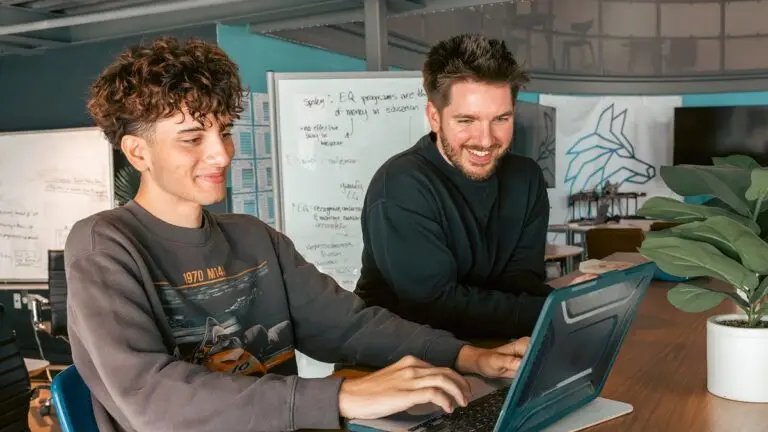
Hilarious photo of our students at Texas Sports Academy. So much personality in one pic.

Over time, kids have that critical realization: “Whoa, I’m actually really good at math. Turns out, if I apply myself and put in the work, I really can learn anything — and I can learn it fast. What else can I go out and learn?” And just like that, their inner self-driven learner has been unlocked.

Does your kid love gaming? Then strike a deal with them: if they can finish their homework in a certain amount of time (something challenging but doable), then they can unlock more gaming time. Do they love cars? If they score straight A’s on their report card, you’ll take them to that car show they’ve been talking about.

No one knows your kid better than you do. The nitty-gritty specifics are yours to figure out. But this is where you can start applying that high-standards-real-stakes coaching model. Challenge them, support them, reward them, and hand them actual responsibility. Help them have that critical realization: that they are the owners of their time. That if they just apply themselves, they can accomplish anything. And the more responsible decisions they make, the more freedom they get in return.

But what if school just…did this?

If the coaching model is this effective at developing capable, resilient, accountable young people, why are we only applying it to athletics? What would it actually look like if a school ran on the same philosophy: high standards, expert mentorship, and personalized learning through the lens of high-level sports?

Well, we built that school. It’s called Texas Sports Academy.

And in my next essay, I’ll show you exactly what happens when we start treating academics like athletics.

7 Reasons Your Kid’s Creativity Thrives Without Traditional Arts

Our approach to music, art, and theater looks nothing like what most of us grew up with. Parents ask about this a lot. How do kids get enriched in the arts without the bread and butter classics like required band or mandatory choir?

This week on the Future of Education podcast I sat down with Hannah, an Alpha guide with a background in acting who is spearheading some incredible music workshops this session. She’s here to walk us through how our non-traditional approach to the arts works on a day-to-day basis at our elementary campuses and how we help kids find their creative voices.

I’ve shared some highlights below. And if you enjoy reading or listening, leave a comment, like, or subscribe.

— MacKenzie


7 highlights from this episode

 
  1. Traditional schools are putting kids in boxes they never asked for. When my oldest was in kindergarten, I watched her perform in the school musical. Another mom leaned over and said, “This is my fourth time watching this — all my kids have been in it.” My daughter (who had genuine musical talent) couldn’t have been more bored. Why are we doing this? Why not let kids design their own musical from scratch? That’s what our students are doing, and the creativity coming out of it is incredible.

  2. Forcing kids to like something is the fastest way to make them hate it. How many parents force their kids to play piano at 5, only for them to quit the moment they have a choice? I’m Exhibit A here. Every year growing up, my school would take us to the symphony. And every year, I would fall asleep. Since becoming an adult, I’ve never been back. Forced attendance doesn’t create appreciation. It often has the adverse effect, leading to boredom, disinterest, or even resentment.

  3. The gravitational pull of curiosity is more powerful than the most expert teacher in the world. From Hannah:“You can have the greatest music lessons in the world, you can have the greatest experts ever come in, but there’s something different between mandatory music and ‘let’s see what they gravitate toward.'”

  4. Kids know more about what they love than we give them credit for. Unfortunately, we’re pretty good at dismissing kids’ interests. We think they’re too young, too immature, too naive. But this is a gross oversimplification. Have you ever seen a six-year-old obsess over something they love? They’re curious little sponges, desperate to go out in the world and acquire more skills and knowledge. It would totally exhaust us. Kids are not too young to know what they like. They’re just rarely given the chance to explore it.

  5. We don’t have to control every learning moment. Sometimes, our job is to just get out of the way. Kids unearth their own interests all the time. And when they do, our role is to motivate and support, not redirect toward a predetermined outcome.

  6. When kids are given ownership, their behavior changes entirely. From Hannah: “When you give kids ownership over their learning, they’re not going to mess around. They’re not going to treat it like a toy.” We see this play out constantly. The same kid who tunes out in a structured class will spend 45 focused minutes on a song they wrote themselves.

  7. Expose, don’t force. Our goal is to expose kids to music and the arts, giving them an honest chance to decide what they like, what bores them, and if they want to create something themselves. This is a wildly different starting point than “everyone learns the same thing at the same time on Tuesday whether you like it or not.”


There’s a lot more in this episode, including deep dives into our specific workshops and how students are responding when given actual ownership and agency. You can listen to the full episode here.